ServicesSoffit and Fascia
Soffit and Fascia Repair in Bellefontaine
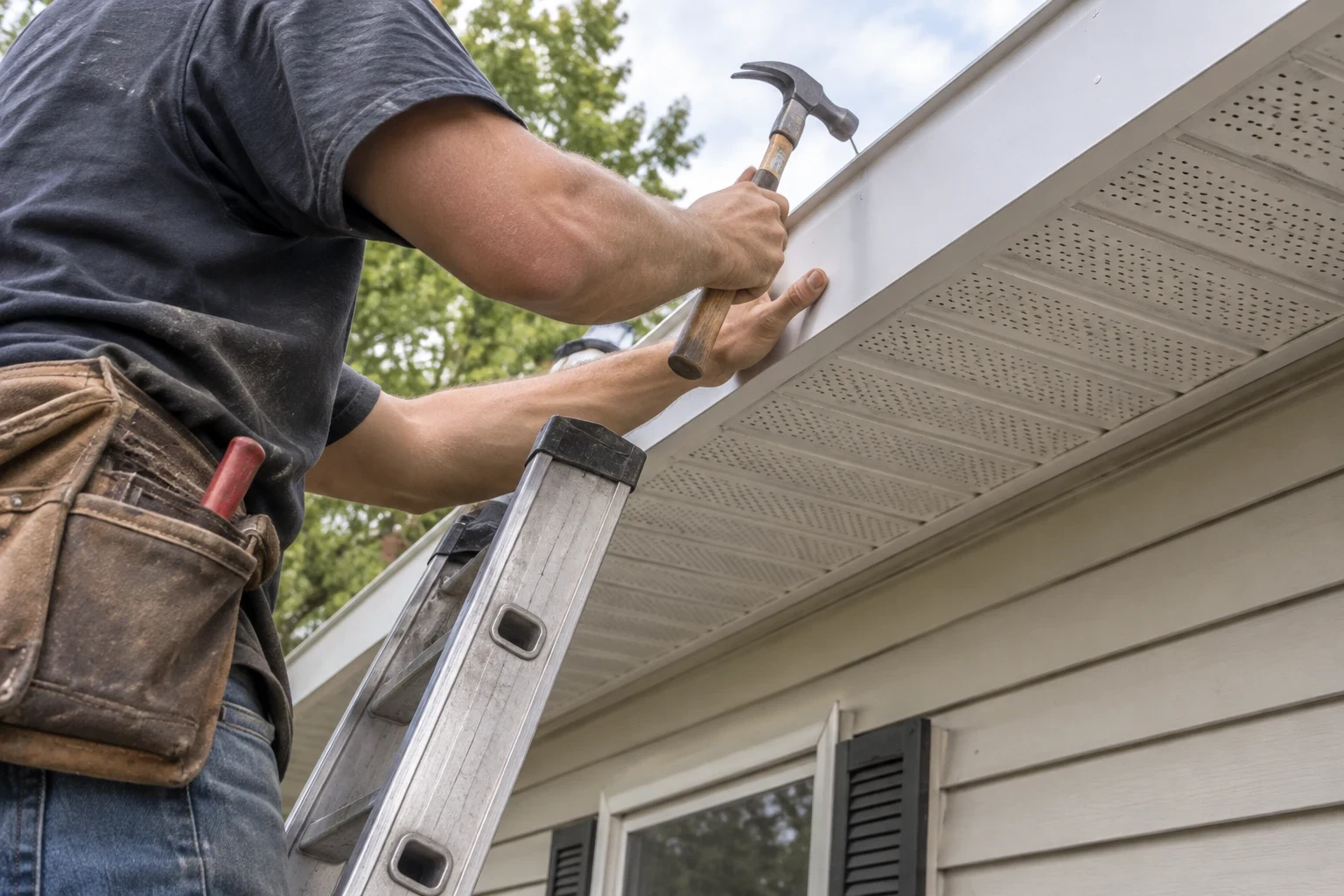
We replace rotted fascia, rebuild sagging soffit and restore the intake vents your attic depends on. The goal is eaves that shed water, keep animals out and let your roof breathe before the next cold season sets in.
The job soffit and fascia do
Fascia is the board that runs the length of the roof edge. Your gutters hang from it, and it supports the drip edge. Soffit is the paneling below the overhang, and on most houses it carries the intake vents that bring outside air into the attic.
A failure in either one spreads to other parts. Damp fascia loosens gutter screws. Damaged or clogged soffit cuts off attic airflow, holding in moisture through winter and heat through summer and wearing out shingles sooner. Gaps let in squirrels, bats and wasps.
We schedule this work by the season. Repairing the eaves in late summer or fall means dry wood, open vents and firmly hung gutters by the time snow and ice weigh on the roof edge.
What the work includes
Rotted fascia replacement
We cut out soft sections of fascia back to sound wood and install new primed boards sized to match. If the rafter tails behind them have started to rot, we sister or repair them so the new board has something solid to fasten to.
Aluminum fascia wrap
Bare or painted wood can be covered with bent aluminum coil formed on site to fit your trim. It stops the cycle of peeling paint and water soaking into the grain.
Vented soffit panels
We install vinyl or aluminum soffit with perforated vent panels where the attic needs intake air. Solid panels go where there is no attic space above, such as porch ceilings.
Attic airflow check
From inside the attic we look for insulation pushed against the soffit vents. Where it is blocked, we add baffles so air can move from the eaves up to the ridge.
Drip edge and gutter reset
If the drip edge is missing or bent, water runs behind the gutter and down the fascia. We correct the drip edge and rehang the gutters on the new board with proper pitch.
Warning signs along the eaves
Flaking paint on the fascia
Blistered or peeling paint on the fascia often means moisture is reaching the wood from the back. Push a screwdriver into the board; if it goes in easily, the wood has gone soft.
Gutters leaning away
A sagging or tipping gutter is frequently attached to rotted fascia that will no longer hold a screw. Snugging up the hangers only helps for a short while.
Stained or drooping soffit
Dark marks, warped panels or soffit sagging between rafters suggest a roof edge leak or winter ice backing up.
Nests or animals at the roof edge
Gnawed corners, droppings or birds slipping into a gap mean there is an opening. Left alone into cold weather, squirrels and bats will make it bigger.
Attic frost or mold
January frost under the roof deck or a musty summer smell often comes from soffit vents that were painted over, packed with insulation or never put in.
How a soffit and fascia job runs
- 1
Look at the whole edge
We walk the perimeter, probe the fascia and check the attic side of the soffit. Before anything is scheduled, we show you pictures of the soft spots and gaps, then put the job in writing section by section so you can see exactly which runs of trim are coming off.
- 2
Protect and open up
We lay tarps over beds and walkways, take down any gutters that are in the way and remove the old soffit and damaged boards.
- 3
Repair and install
Rotted wood and rafter tails are repaired first. Then new fascia, the aluminum wrap and the soffit panels go up, with vent panels placed where the attic needs intake air.
- 4
Rehang and clean up
Gutters go back on with fresh fasteners and correct slope toward the downspouts. We pick up nails and cut scraps from the lawn and walk you through the finished work.
What sets the price
We price soffit and fascia by how much eave is involved and by what turns up when the old material comes down. If we find hidden rot, we tell you right away and go over the options before doing more. The phone quote is where we start; the written estimate comes after the inspection.
- Length of trim
- Fixing one damaged corner costs much less than wrapping the whole house. Gables and dormers add footage fast.
- What is behind the boards
- Rot in the rafter tails or the edge of the roof sheathing calls for more carpentry. Often it only shows once the fascia comes off.
- Materials picked
- Vinyl or aluminum soffit and the fascia coil color all change material cost. Matching an older trim color can narrow the choices.
- Reach and height
- Second-story eaves, steep roofs and plantings tight to the foundation add ladder and staging time.
- Gutters
- Taking gutters down and rehanging them is labor that belongs in the price. If they are worn out, we can price new gutters along with the trim.
Questions about soffit and fascia
Something not covered here? (937) 971-5381
Can my existing fascia simply be covered with aluminum?
Only when the wood beneath is solid. Covering rotted fascia hides it while the decay continues and the gutter screws keep working loose. We probe each run first and swap out soft wood before the coil goes on.
Is vinyl or aluminum soffit the better pick?
Each performs well, and neither needs paint. Aluminum is more rigid and stands up better to animals and on deep overhangs. Vinyl is cheaper and does not dent. We will say which suits your overhang and trim color.
When in the year should this be done?
Late summer and fall are best, since the wood is dry and the work is finished before freeze-thaw and ice reach the roof edge. Spring works too once the heavy rain lets up. We book dry spells so the attic never sits open in wet weather.
What if animals have moved into the soffit?
We check for activity before sealing anything, so nothing gets trapped. If animals are still inside, that section stays open until they leave, and then we close the gap with solid material.
Is the problem my roof or my gutters?
Often it is both. Spilling gutters and ice working under the shingles cause most fascia rot. If we spot a leak at the roof edge, we show you and talk about roof repair, and a roof inspection can find these problems before the trim gives out.
Have your eaves sorted before cold weather
Describe what you notice at the roof edge and we will book a time to check the fascia, soffit and attic vents. Photos and a written estimate come before any work begins.