ServicesRoof Replacement
Roof Replacement in Bellefontaine
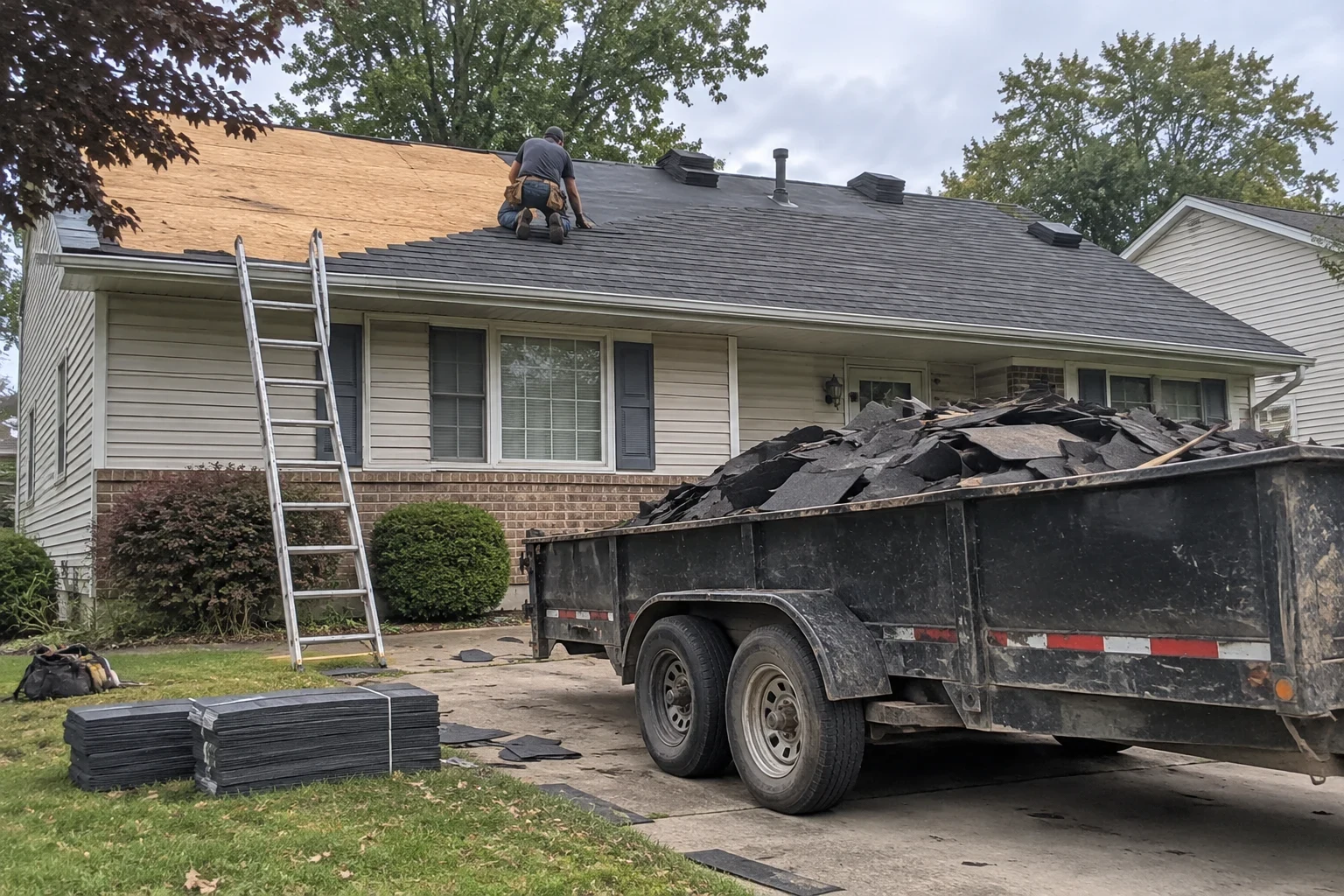
Once a roof is worn past patching, we strip it down to bare decking, swap out any soft wood and build a new roof system meant for Ohio winters. We book the work during warm, dry stretches so the shingle sealant bonds, and your home heads into the next season ready.
When replacement is the right call
A roof can usually be repaired when the damage is local: a few missing shingles, a cracked pipe boot, a loose run of flashing. Replacement makes sense when the problem is the whole field. Asphalt shingles shed granules as they age, the asphalt underneath dries and turns brittle, and once that happens new leaks show up faster than patches can hold them.
Timing matters more than most people expect. The sealant strips on asphalt shingles need warmth and sun to bond to the course below, which is why we prefer to install from late spring through early fall. A roof finished in September still has weeks of warm afternoons to seal before freeze-thaw cycles and the first snow load arrive around Bellefontaine.
Not sure which side of the line your roof is on? Our Roof Inspections page explains how we check it, and Roof Repair covers the fixes that can buy an older roof more years.
What comes with your new roof
Stripped down to bare deck
We remove all the old shingles and underlayment instead of roofing over them. Plenty of older homes already carry two layers, and a third would hide soft wood and put weight on rafters not designed for it.
Decking checked and repaired
With the sheathing exposed, we go over every sheet and replace delaminated plywood, rotten planks and swollen OSB. Damage tends to collect around chimneys and in valleys, and we photograph it before it gets covered.
Ice and water shield at the leak points
A self-adhering membrane goes along the eaves, down every valley and around each penetration. It seals around nails, so water trapped behind an ice dam cannot reach the wood.
Fresh metal and underlayment
The remainder of the deck gets synthetic underlayment. We replace the drip edge, step flashing and pipe boots, because reused metal and cracked rubber often cause leaks on otherwise new roofs.
Attic ventilation in balance
We compare soffit intake with ridge exhaust and add vent area where either comes up short. A poorly vented attic bakes shingles from below in summer and melts snow unevenly in winter, which starts ice dams.
Yard protected, nails picked up
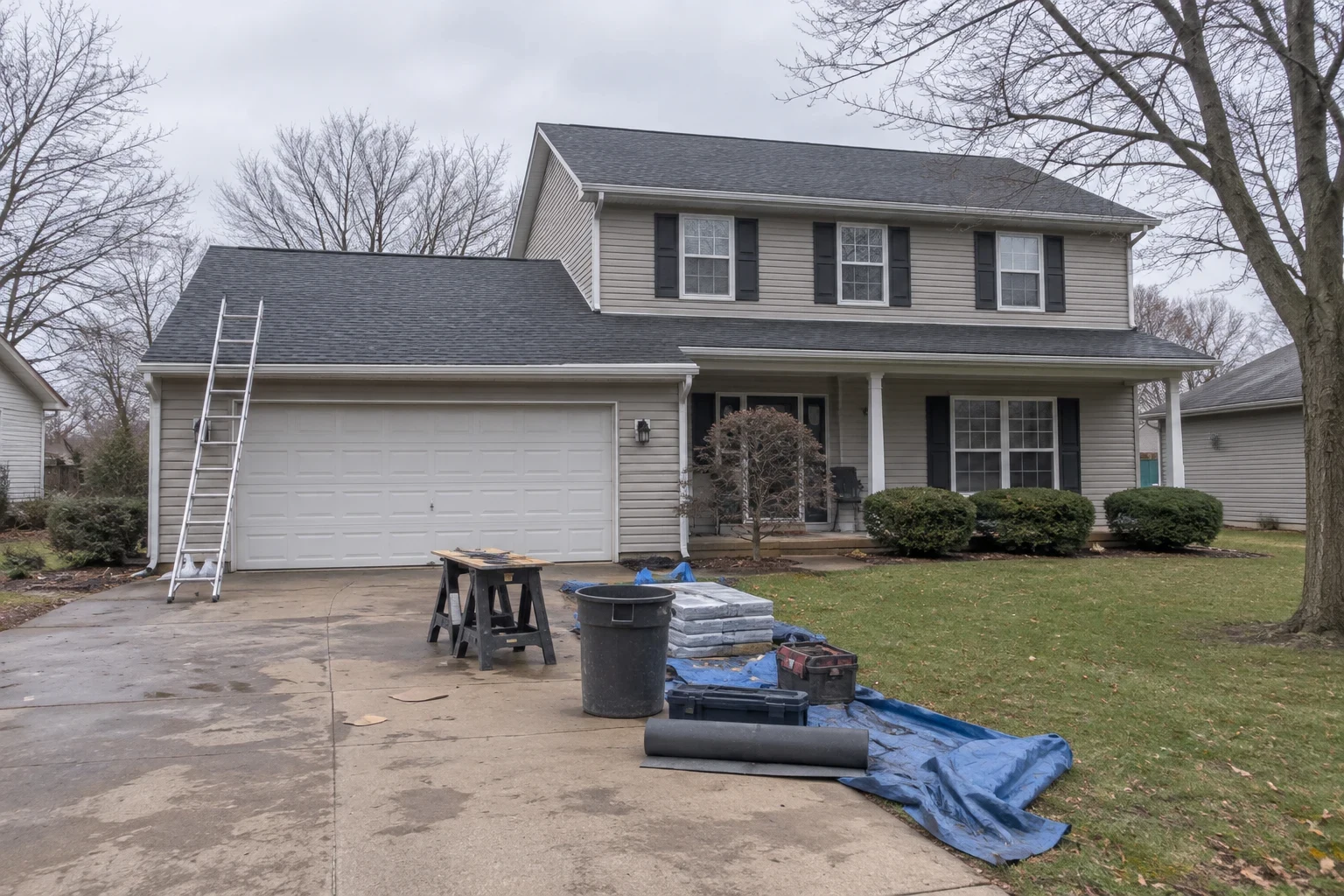
Tarps cover plantings and walkways during tear-off, and debris goes straight into a dumpster. Before we leave, a magnet sweep of the lawn and driveway collects stray nails.
Signs your roof is past patching
- Granules washing out of downspouts
- When gutters and downspout outlets fill with granules, the shingles are losing the layer that blocks UV. Bare asphalt breaks down quickly from there.
- Curling or cupped shingles
- Edges that curl up or tabs that sink in the center show the asphalt has dried out. Raised tabs catch the wind and snap in cold weather.
- Leaks that move around
- One leak usually means one failed part. When a new drip appears somewhere different every year, the whole roof surface is wearing out.
- Decking that dips or gives
- A roofline that sags between rafters, or spots that flex when stepped on, usually means moisture has soaked the sheathing. That wood needs to be cut out and replaced, not buried under new shingles.
- Recurring ice dams
- Thick ice building up at the eaves year after year often comes from poor attic ventilation or thin insulation. Both are easiest to correct while the old roof is off.
How a replacement job runs
- 1
Measure and write it up
We measure the roof, check the attic for ventilation and moisture stains, and give you a written, line-item estimate. Tear-off, decking allowance, materials and permit each get their own line.
- 2
Pick the weather window
We set a date in a dry stretch with temperatures suited to shingle sealing, and we pull the permit where your town requires one. If rain moves in, we move the date rather than open your roof.
- 3
Tear off and dry in
The crew strips one section at a time and covers it with membrane and underlayment the same day. The deck is protected before we leave each evening.
- 4
Install shingles and ridge vent
Shingles go on with the manufacturer's nailing pattern, flashing is set at every wall and chimney, and the ridge vent is cut in and capped.
- 5
Final walkthrough
We walk the property with you, sweep for nails, haul the dumpster and show you photos of the deck work and flashing details.
What sets the cost of a replacement
We price each replacement from real roof measurements and a look inside the attic, never from a ballpark number. Your written estimate breaks out every item, permit fee included, so you can follow where each dollar goes. These are the factors that swing the total most.
- Size and pitch
- Roof area is counted in squares, with one square equal to 100 square feet. A steep pitch calls for extra fall protection and slower footwork, so labor climbs.
- Layers to remove
- Two layers of old shingles mean twice the stripping and twice the weight hauled to the dumpster.
- Deck condition
- Soft or delaminated sheathing must come out before new material goes down. We charge for it by the sheet, so you pay only for the boards that truly need replacing.
- Shingle line and ventilation
- Architectural shingles run higher than basic three-tab. Cutting in a ridge vent or adding soffit intake adds both material and labor.
- Chimneys, valleys and skylights
- Every valley and penetration gets hand-fitted flashing. A roof with many of them costs more per square than a plain gable.
Common questions about a new roof
- Can the new shingles go right over the old ones?
- Code usually allows no more than two layers, and even where a second one is permitted we recommend tearing everything off. A layover covers up soft decking and old trouble, keeps ice and water shield from bonding to the wood and puts more weight on the framing.
- How long does the job take?
- On most single-family homes we are done in one to three days. The size and pitch of the roof and how much decking needs replacing set the pace. Weather can push the start date, and we call you the moment the forecast changes.
- Which season works best for a new roof?
- The sealant strips on shingles bond best in warm sun, so we aim for late spring through early fall. Cooler-month installs can still happen, with tabs sealed by hand where needed. Booking early means your roof is done before winter freeze-thaw.
- Do I have to stay home during the work?
- No, just at the start and the end. We like to see you on the first morning and at the final walkthrough. Tear-off is loud. Please clear cars from the driveway and take breakable items down from walls directly under the roof.
- Is this a good time to replace the gutters too?
- If your gutters sag, drip at the seams or hold standing water, replacing them with the roof lets the new drip edge and gutters fit together the right way. Our Gutters page covers that work, and Soffit and Fascia covers the boards the gutters hang on.
- Do you replace roofs beyond Bellefontaine?
- Yes. We put new roofs on homes throughout the area, Urbana, Sidney, Kenton and Marysville among them. You can find the rest of the towns on our Service Areas page.
Get your new roof on before the weather turns
Give us the age of your roof and describe the trouble spots, and we will book a visit to measure it and walk through your choices. Your quote comes by phone, with each line explained in plain terms.