ServicesRoof Repair
Roof Repair in Bellefontaine
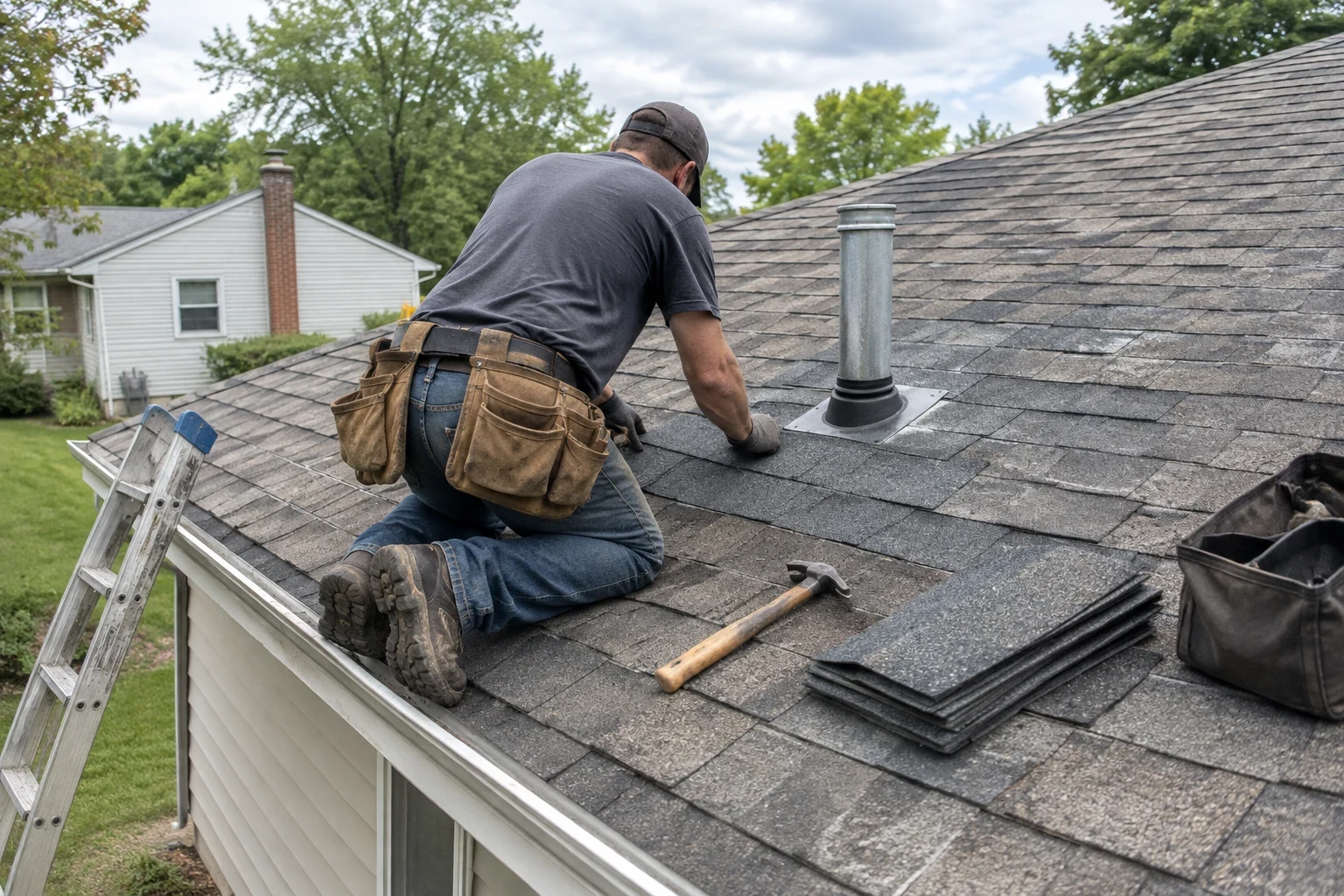
A leak almost always traces back to a single weak point: a split rubber collar on a vent pipe, shingle tabs that have come unsealed, or flashing that has worked loose. We follow the water back to it, replace that part and any soft decking, and close the roof up before the weather turns.
Fixing the Part That Failed, Not the Whole Roof
Water rarely gets in through the middle of a shingle field. It finds seams: the rubber collar on a plumbing vent that has dried and split, step flashing along a wall that was face-nailed and then rusted, a valley where shingles were cut short, or a nail that backed out and pushed up the shingle above it. Roof repair means replacing that specific component and any wet decking or underlayment beneath it, so the water path is closed rather than caulked over.
Repair is the right call when the rest of the roof is sound. That means shingles that still hold their granules and lie flat, decking that feels firm underfoot, and damage confined to one area. If we see brittle, curling shingles or soft decking across several slopes, we will say so, show you the photos and explain why roof replacement would be the better spend.
Timing changes the outcome. A small gap in late summer becomes a wide one after a few months of central Ohio freeze-thaw, and ice dams will push meltwater straight into it. We like to close those gaps in fall, before the cold arrives.
What a Roof Repair Covers
Leak tracing
The attic tells us more than the ceiling does. Water marks on the sheathing and rafters show the true entry point, and we line that up with the roof surface above, because water can travel along a rafter for several feet before it falls.
Flashing repair
Where a roof slope meets a sidewall, wraps around a chimney or forms a valley, the metal there is the usual weak link. We reset loose pieces and replace rusted or bent ones, lapping each layer over the one below so water sheds across the surface instead of getting behind it.
Pipe boots and vents
Sunlight breaks down the rubber collar on a plumbing vent years before the shingles around it are worn out. We swap failed boots for new ones and reseat exhaust vents with fresh fasteners and sealant.
Shingle replacement
We loosen the courses above, remove the damaged shingles and fasten new ones just below the sealant strip so the tabs can bond flat. We pick the closest color and profile still being made to fit in with what is already on your home.
Decking and underlayment
Plywood or OSB that has softened or started to separate under the leak gets cut out and replaced. Fresh underlayment goes on before the shingles, with ice and water membrane added in spots that need it.
When Your Roof Is Asking for a Repair
- Water marks inside
- A tan ring spreading on the ceiling, or dark streaks across the attic sheathing, means water has been finding its way in for some time. Look uphill from the mark for the actual source.
- Lifted or missing shingles
- Once the adhesive strip under a tab lets go, wind can flex it until it cracks or tears away. Bare nail heads and exposed felt give water a direct route in.
- Granules in the gutters
- A few granules after a storm are expected. Thick buildup in the gutters, or dark bald spots on the shingles, means the asphalt underneath is baking in the sun and aging fast.
- Damp insulation or daylight
- Flattened, wet insulation or small points of light showing through the decking mark the exact place to check on the roof above.
- Ice dams last winter
- Ridges of ice and long icicles along the eaves usually mean meltwater was pushing back under the shingles. Have that edge checked before the next cold spell.
How a Repair Visit Runs
- 1
Your call
Tell us what you are seeing and where. Knowing whether the drip shows up during heavy rain or during snowmelt already narrows down the cause.
- 2
Inspection and photos
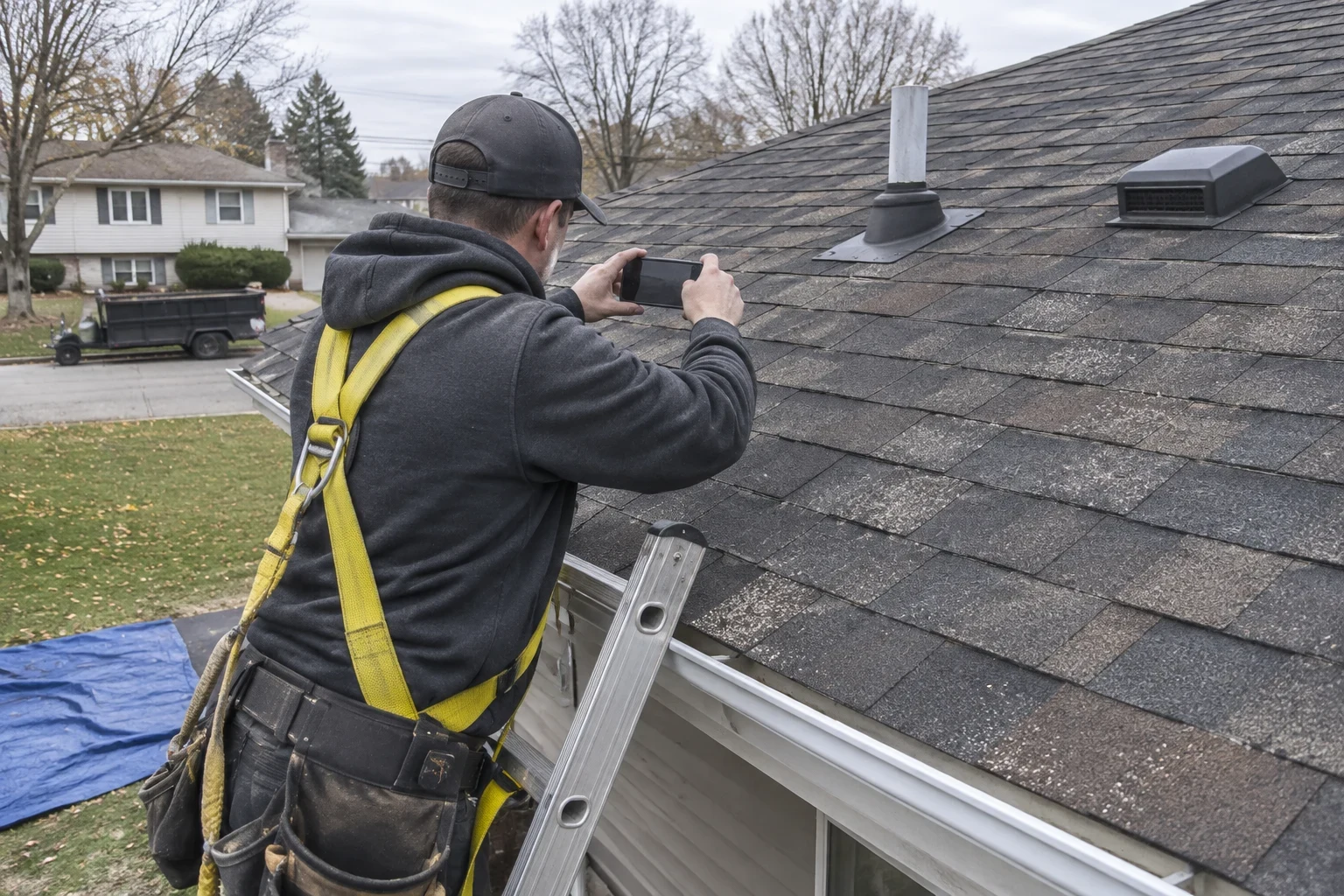
We check the attic and the roof surface, then photograph the failed part and the area around it. You see what we see, including anything that looks fine.
- 3
Written estimate
You get a line-item estimate that lists the materials, the decking allowance if rot is likely, and the labor. If replacement is the smarter move, we explain why in plain terms.
- 4
Repair day
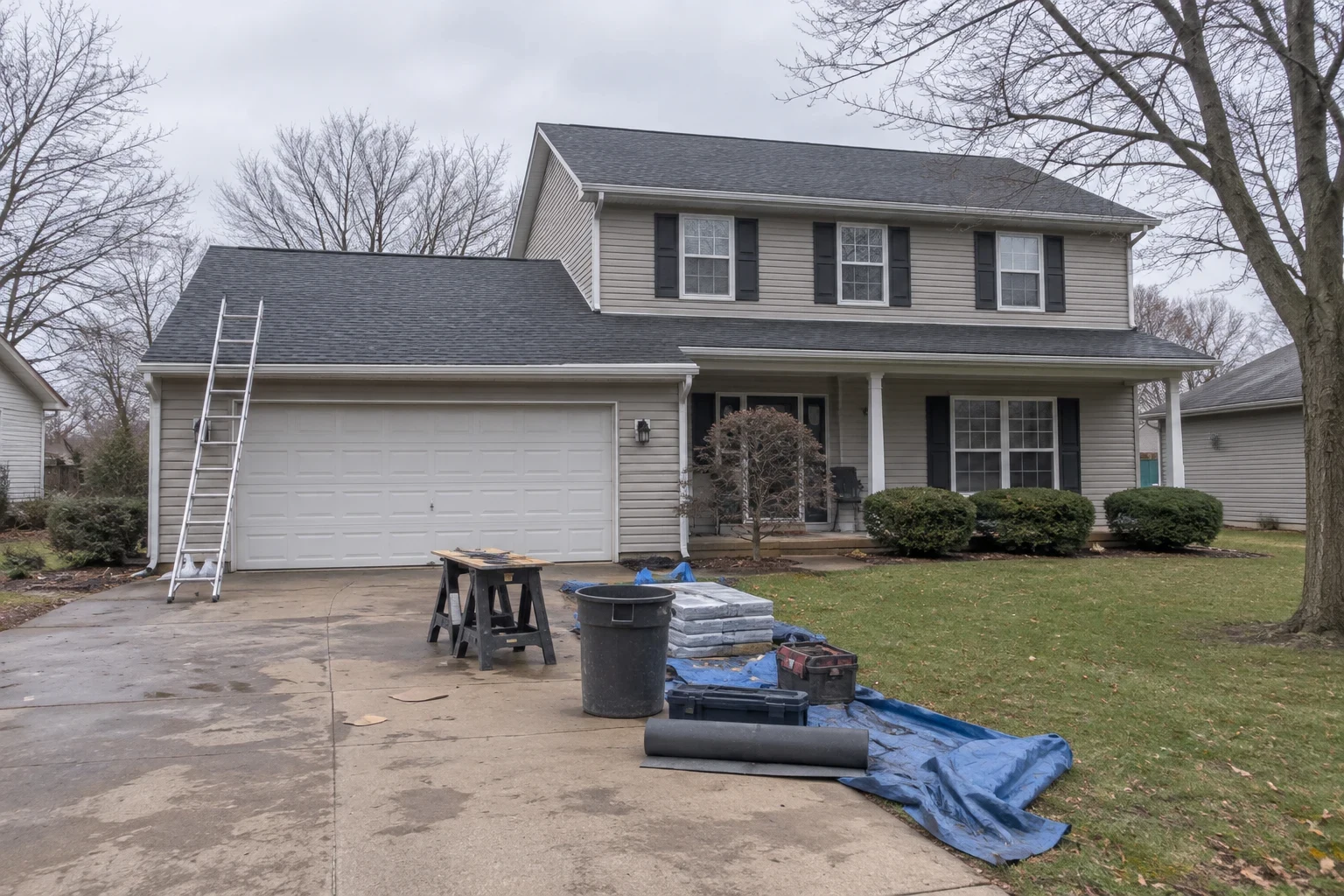
We protect landscaping and set ladders carefully, make the repair, then clean up. That includes a magnetic sweep of the driveway and beds for stray nails.
What Affects the Cost of a Roof Repair
Two leaks that look the same from inside can cost very different amounts to fix. The price depends mostly on what we find once the shingles come up, and how hard the spot is to reach. Our estimate spells out each item so nothing appears on the bill that you did not see first.
- Location and pitch
- A boot on a low-slope rear roof is quick work. A chimney on a steep front slope needs extra fall protection and staging time.
- Condition underneath
- Water that has sat for months often rots the decking. Replacing sheathing adds material and time, which is why we note a decking allowance up front.
- Materials and matching
- Standard architectural shingles and common boot sizes are simple. Discontinued colors, specialty flashing or copper work raise the cost.
- How far the failure spread
- One cracked boot is a contained job. Flashing that failed along an entire sidewall means more courses to lift and more metal to replace.
Common Questions About Roof Repair
- Will the repair blend in with my existing shingles?
- In most cases it comes close enough that the patch is hard to pick out. Color varies a little between production runs, and your current shingles have been faded by the sun, so new ones can look slightly brighter for a season until they weather. If your line is no longer made, we show you the nearest options on the market and you pick before we start.
- Is it better to repair or replace my roof?
- That comes down to how far the damage reaches. When the problem sits in one spot and the other shingles lie flat, bend without cracking and keep their granules, a repair is money well spent. When shingles over several slopes are brittle, cupped or cracking, fresh problems keep turning up next to every patch. Our photos let you weigh the answer yourself.
- Can you repair a roof in winter?
- Yes, but cold weather makes it tougher. Cold asphalt cracks more easily when lifted, and the factory sealant strip will not stick until it warms, so in winter we hand-seal every tab. That is why we suggest taking care of known trouble spots in late summer or fall.
- Do you look over the rest of the roof while you are up there?
- Yes. During the repair we check the other vent boots, the flashing at walls and chimneys and the general condition of the shingles, and we let you know about anything close to failing. You make the call. If you want a full written report, our roof inspections service covers the whole system in more depth.
- Can gutters be behind my roof leak?
- Yes. A gutter that is clogged or sloped wrong holds water at the eave, where it can work under the starter row and rot the fascia board the gutter hangs from. If that is part of the problem, we show you and explain how our gutters or soffit and fascia work would correct it.
Get That Leak Closed Before the Cold Sets In
Tell us where the water is showing up and we will schedule a visit to find the failed part and give you a written estimate. Fixing it this season keeps a small repair small.