ServicesRoof Inspections
Roof Inspections in Bellefontaine
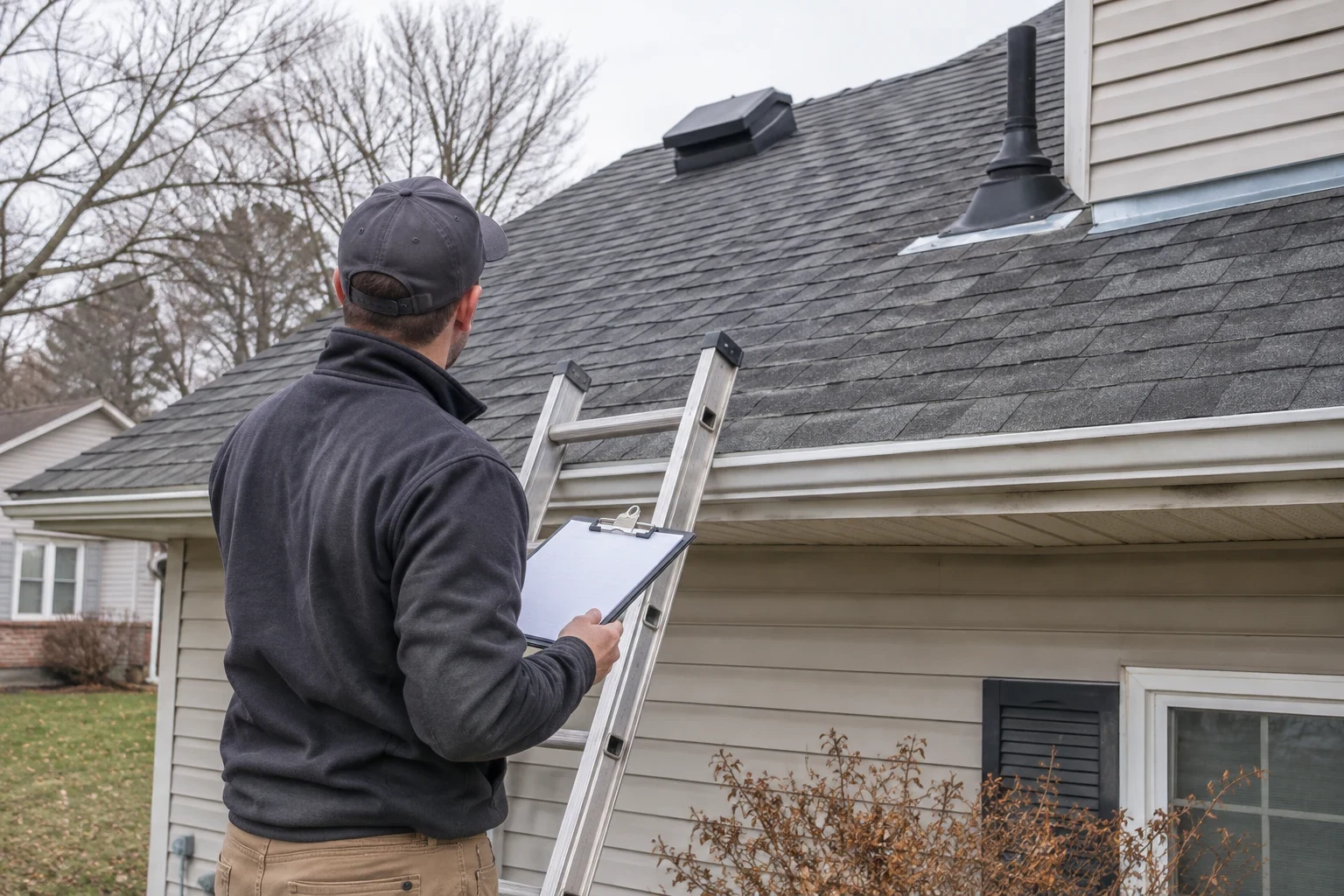
We walk your roof and crawl your attic to find the small failures before winter freeze-thaw or summer heat turns them into leaks. You get photos of what we saw, a plain explanation of the cause, and an honest answer on whether anything needs work now.
What a Roof Inspection Tells You
Leaks rarely begin with anything dramatic. More often it is a neoprene pipe collar that has split in the sun, one shingle whose seal strip let go, or an opening where the step flashing pulls away from the wall. You cannot spot any of that from the yard, and once a ceiling stain shows up, the plywood decking beneath the shingles may have been wet for months.
An inspection is the right call when your roof is past the midpoint of its life, when you saw ice dams or a drip last winter, or before you buy or sell a home. We time these visits ahead of whichever season will work the roof hardest. A fall inspection catches what would fail under snow load and freeze-thaw. A spring visit finds what winter loosened before summer heat starts baking the attic and the shingles.
Nothing about an inspection obligates you to hire us for anything. If the roof is sound, we tell you so.
What Our Roof Check Covers
Shingle condition and granule loss
We check for bald patches, cupping, curling and cracked tabs. As asphalt shingles age they shed their protective granules, and once sun reaches the asphalt mat it dries out and turns brittle.
Flashing and valley joints
We look closely at chimney counterflashing, step flashing at walls and the metal or woven shingles in every valley. These joints shift with temperature changes, and most leaks start there.
Every vent, boot and opening
Rubber pipe boots crack after years in the sun, and exhaust vents can come unsealed. We inspect each penetration, skylights and satellite mounts included.
Attic and decking from inside
In the attic we watch for daylight along nail lines, water marks on rafters, frost or mold from weak ventilation, and plywood that is soft or separating.
Eaves, gutters and fascia
We check the drip edge, the gutter slope and fasteners, and the fascia board behind them for rot. Clogged or drooping gutters force water back under the first row of shingles.
Photos plus a written recap
Each issue we find is photographed and paired with a brief note on its cause, so you see your roof just as we saw it.
Signs It Is Time for a Roof Inspection
Granules piling up at downspouts
Dark grit gathering where a downspout empties means the shingles are wearing off their top coat. A new roof drops some loose granules in its first year or two, but heavy piles from an older roof mean the wear has gone far.
Ice dams last winter or before
Ridges of ice at the eaves tell you warm air is leaking into the attic. Meltwater backs up beneath the shingles, so have the decking and ventilation looked at before the next freeze.
Stained ceilings or a musty attic
Brown rings overhead or a stale odor near the attic hatch point to moisture getting inside. Water tends to travel along the decking or a rafter first, so where it actually enters may be several feet uphill of the stain.
Shingles curling or lifting
Curled edges or tabs that flap in the wind have lost the bond of their seal strip and could rip off in the next strong gust.
A roof past 15 years old
At about this age, plenty of asphalt roofs begin having failures from wear, even when nothing looks wrong from the ground.
Buying or selling a home
An inspection focused on the roof goes further than a general home inspection and tells both buyer and seller how many years the roof has left.
How Inspection Day Works
- 1
Scheduling by phone
You tell us the age of the roof, any symptoms, and whether we can reach the attic. We set a day ahead of the coming season.
- 2
Ground and perimeter walk
We start at ground level, checking gutters, downspouts, fascia and the roofline for sagging or uneven planes that suggest decking problems.
- 3
On the roof
Where pitch and conditions allow, we walk the surface and check shingles, flashing, vents and the ridge by hand. We do not go up on ice or in high wind.
- 4
Inside the attic
With your permission we check the underside of the decking, insulation depth and intake and exhaust ventilation.
- 5
Findings and next steps
We go over the photos with you and explain each issue. If something needs attention, we give you a written estimate and tell you plainly whether roof repair is enough or roof replacement makes more sense.
Pricing Factors for a Roof Inspection
Two things drive what we charge: how much roof surface we have to cover and how much effort it takes to reach it and the attic below. We give you the figure while you are on the phone with us, before a date goes on the calendar, so you know the cost of the visit up front.
- Size and pitch
- A larger roof has more squares of shingle to walk and examine. Steeper slopes also call for roof jacks or harness anchors before anyone can safely stand on them.
- Roof complexity
- Each valley, dormer, chimney and skylight is one more flashing joint we check by hand.
- Attic access
- A pull-down stair or walk-up attic is quick to get through. A narrow scuttle hatch or a low crawl over the ceiling joists takes longer.
- Report needs
- Preparing a formal written report for a buyer or seller takes more time than sitting down with you to go through the photos.
Roof Inspection Questions
Something not covered here? (937) 971-5381
How frequently does a roof need a professional check?
For most asphalt roofs, one visit a year keeps small problems small. After roughly 15 years, a check every spring and fall makes sense. Ohio's repeated freezing and thawing pries open gaps in sealant and flashing faster than people expect.
When is the best time of year to schedule?
Early fall, before the first hard freeze, lets us find problems that snow and ice dams would make worse. Spring is the second-best window, to catch what winter loosened before summer heat.
Will you just try to sell me a new roof?
No. Most inspections end with either a clean result or a short list of small repairs. We show you photos of every issue and explain the cause, so you can judge the recommendation yourself.
How long does an inspection take?
Most take about an hour on a typical home, longer for large or steep roofs. Going over the photos with you afterward adds a few minutes.
Do I need to be home?
For the exterior, no. For the attic portion, someone needs to let us in, and it helps if the access hatch is clear.
Do you serve towns outside Bellefontaine?
Yes. We inspect roofs in nearby communities including Urbana, Sidney, Kenton and Marysville. Ask when you call and we will confirm your address is in our area.
Get Ahead of the Next Season
A roof check now costs far less than a ceiling repair after the first thaw. Tell us about your roof and we will find a day that fits.